Fort Dunree
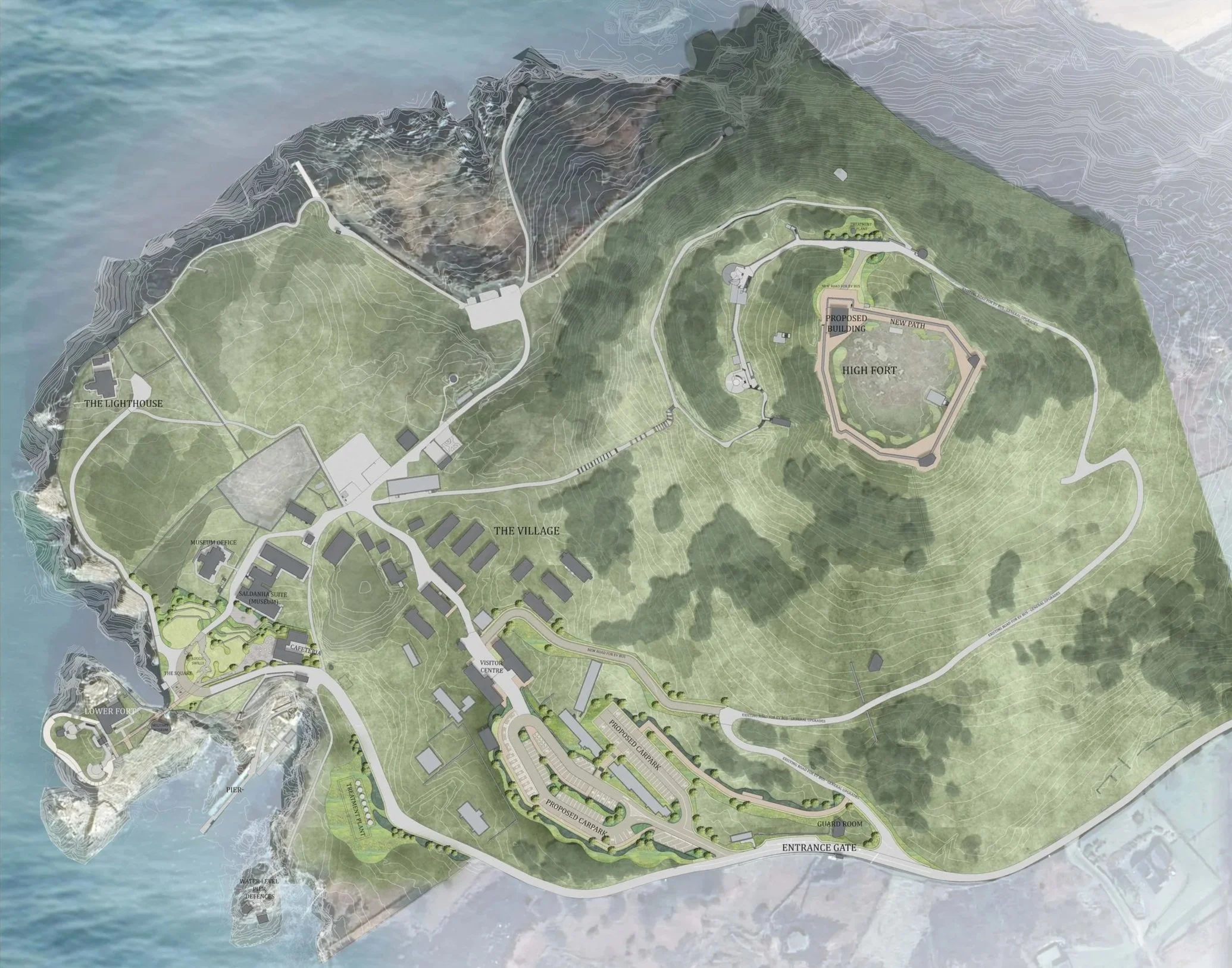
Delivered as a joint venture with Taylor McCarney Architects,the regeneration of Fort Dunree is centred on the conservation and careful adaptation of one of Donegal’s most significant military landscapes. Set dramatically on the edge of Lough Swilly, the project seeks to preserve the character of the historic fort while creating a renewed visitor experience that responds to its architecture, history and exceptional coastal setting. The architectural approach is deliberately sensitive to the existing fabric, working with the fort’s collection of defensive structures, military buildings, gun positions and historic routes rather than treating them as isolated elements. Existing buildings are repaired and adapted for new visitor and interpretive uses, while contemporary interventions are designed to remain clearly legible yet secondary to the historic character of the site. A key aspect of the proposal is the relationship between architecture and landscape. New and existing pathways establish a stronger connection between the lower fort, the promontory and the High Fort, allowing visitors to move through the site and experience its changing levels, framed views and relationship with Lough Swilly. Carefully positioned viewing platforms and new interventions provide moments of pause within the landscape while responding to the exposed and rugged character of the Inishowen coastline. The project adopts a conservation-led approach in which new uses support the long-term future of the historic structures. Through repair, reuse and a restrained contemporary architectural language, the proposal aims to reveal the layers of Fort Dunree’s military, maritime and social history while establishing a sustainable new chapter for the site.
Buncrana, Donegal, Ireland
2020 - Present


A number of the existing buildings at Fort Dunree had fallen into significant disrepair, with years of exposure to the harsh coastal environment leaving much of the historic fabric weathered and vulnerable. Roofs, finishes and structural elements had deteriorated, while vegetation had begun to reclaim parts of the site, giving the buildings a strong sense of abandonment and reinforcing the rugged, atmospheric character of the fort. Rather than viewing this condition simply as decay, the project recognised the existing buildings as important records of the site’s military and social history. The weathered masonry, exposed structure, surviving finishes and traces of previous occupation all contributed to the character of the place and informed the conservation approach. The strategy therefore centred on careful repair, stabilisation and selective reuse, retaining as much of the original fabric as possible while addressing structural and environmental deterioration. This allowed the qualities of the existing buildings to remain visible, preserving the layered and atmospheric character of Fort Dunree while preparing the structures for renewed public use.